Fission and fusion: different reactions, shared engineering questions
The physics of splitting and joining nuclei, how tokamaks confine plasma, what the 2022 NIF result measured, and the engineering problems both fields share.
Fission splits heavy nuclei; fusion joins light ones. The reactions need very different machines, yet both leave engineers with familiar tasks: move heat, manage neutron radiation and protect surrounding materials.
Where does nuclear energy come from?
Every nucleus is held together by the strong nuclear force, and the energy needed to pull a nucleus completely apart is its binding energy. Dividing the binding energy by the number of protons and neutrons gives the binding energy per nucleon, a measure of how tightly each particle is held.
Plotted against mass number, binding energy per nucleon rises steeply for the lightest elements, peaks at about 8.8 MeV near iron and nickel, and declines gradually for heavier elements. Any reaction that moves nuclei toward that peak releases energy:
- Fission splits a heavy nucleus, such as uranium, into two medium-mass nuclei that are more tightly bound.
- Fusion combines two light nuclei, such as hydrogen isotopes, into a heavier nucleus that is more tightly bound.
In both cases the products weigh slightly less than the reactants, and the mass difference appears as energy.
What happens in fission and fusion reactions?
In fission, a uranium-235 nucleus absorbs a neutron and splits, releasing about 200 MeV and two or three new neutrons that can sustain a chain reaction. The reaction proceeds readily at ordinary temperatures, because the neutron is electrically neutral and approaches the nucleus freely.
In the fusion reaction favoured for power plants, a deuterium nucleus (one proton and one neutron) combines with a tritium nucleus (one proton and two neutrons). The products are a helium-4 nucleus, also called an alpha particle, and a neutron, with a total energy release of 17.6 MeV. The alpha particle carries 3.5 MeV and the neutron 14.1 MeV.
Per reaction, fission releases more energy. Per unit mass of fuel, deuterium-tritium fusion releases about four times more, because its fuel nuclei are so light.
Why does fusion need such extreme conditions?
Both deuterium and tritium nuclei carry positive charge and repel each other. To fuse, they must approach closely enough for the short-range strong force to take over, which requires very high speeds. Heating the fuel to temperatures of around 100 to 150 million degrees Celsius gives a sufficient fraction of nuclei the energy they need. At these temperatures the fuel becomes a plasma, a gas of free electrons and bare nuclei.
A useful fusion plasma must combine high temperature, sufficient density and good energy confinement time, which measures how long the plasma retains its heat. The product of these three quantities, known as the triple product, must exceed a threshold for the plasma to heat itself through fusion alpha particles, a condition called ignition. This requirement, first formulated by John Lawson in the 1950s, guides the design of every fusion device.
How does a fission power plant work?
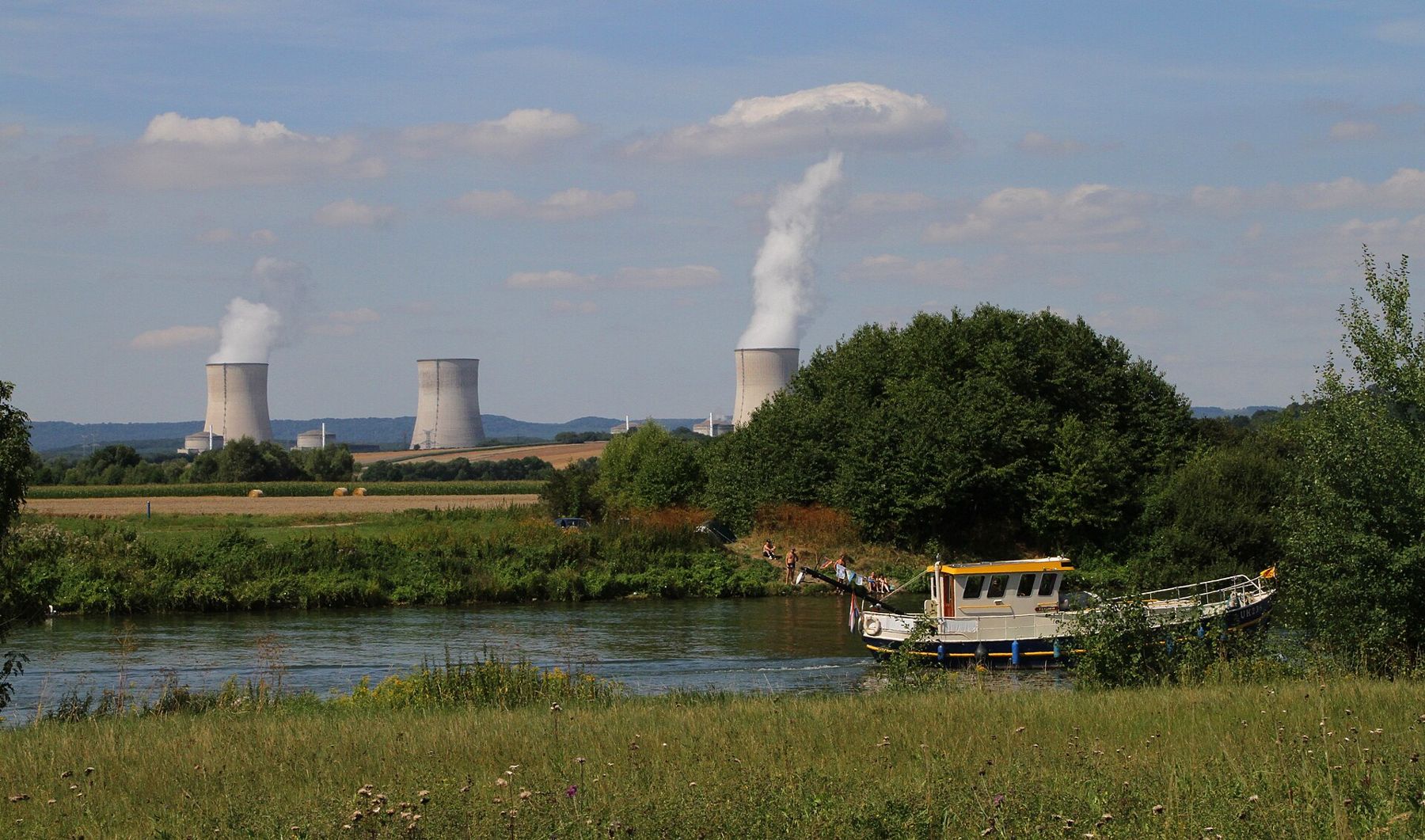
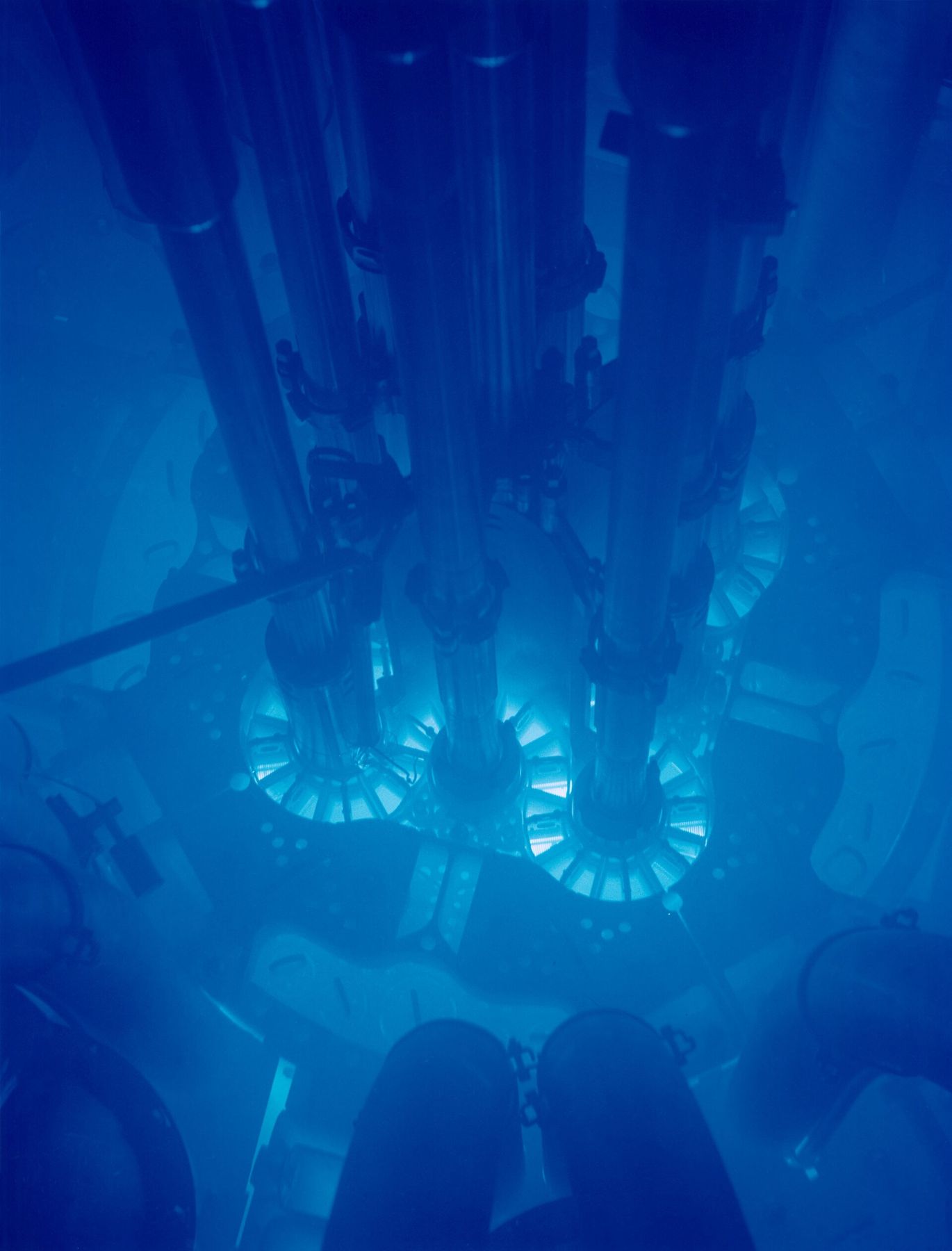
In a fission plant, the chain reaction takes place in fuel assemblies surrounded by coolant, structural components and control systems. Most commercial plants use water to remove heat from the core. That heat produces steam, which drives a turbine and generator through the Rankine cycle. Control rods and soluble neutron absorbers regulate the chain reaction, and delayed neutrons from fission products make that regulation smooth and stable.
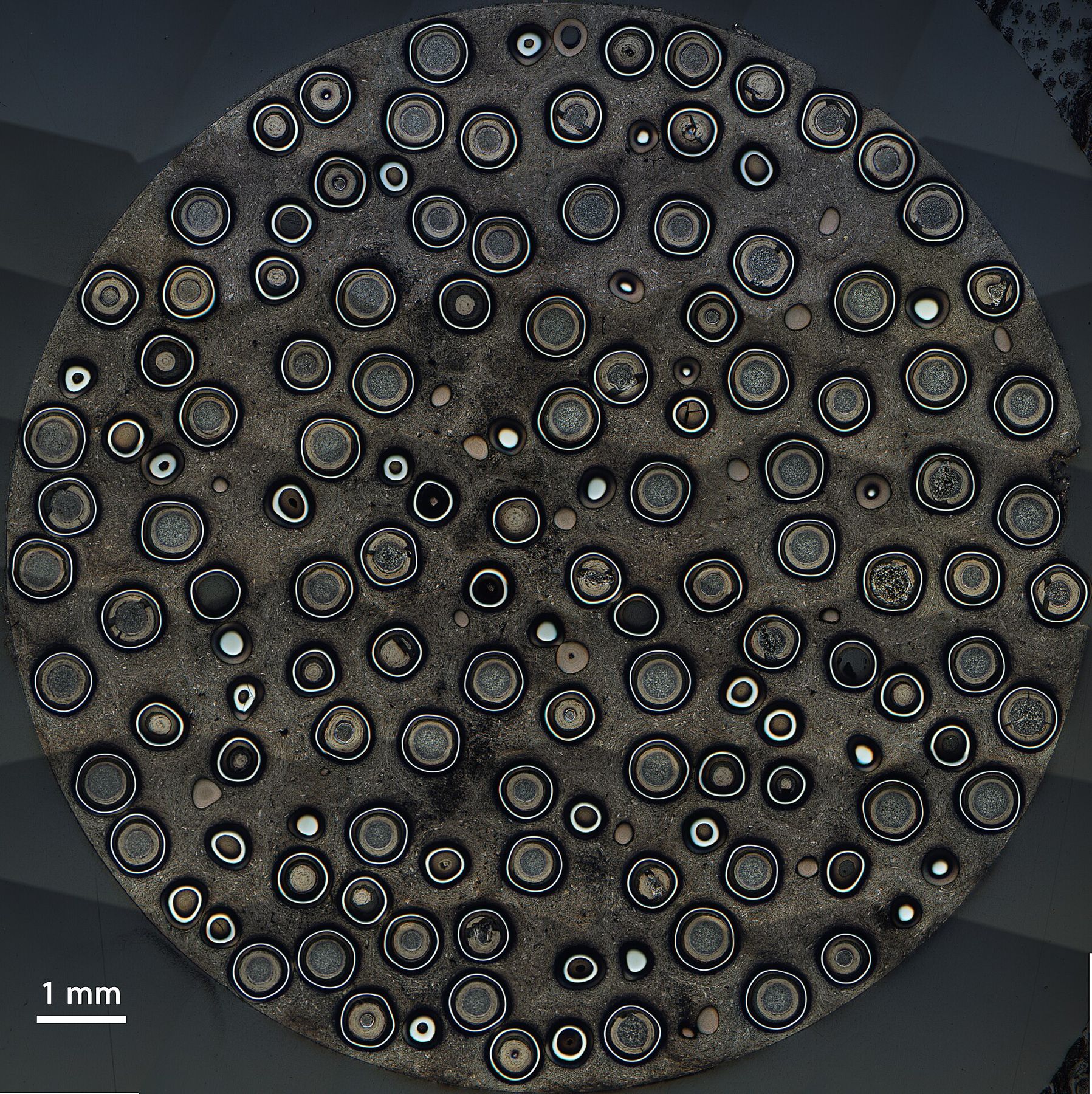
The engineering programme of a fission plant spans fuel behaviour under irradiation, neutron control, coolant flow and heat transfer, the integrity of pressure vessels and piping, radiation shielding, management of spent fuel and waste, and the licensing process that demonstrates safety to a regulator. Fission has accumulated decades of commercial operating experience across hundreds of reactors worldwide.
How does a magnetic fusion device work?
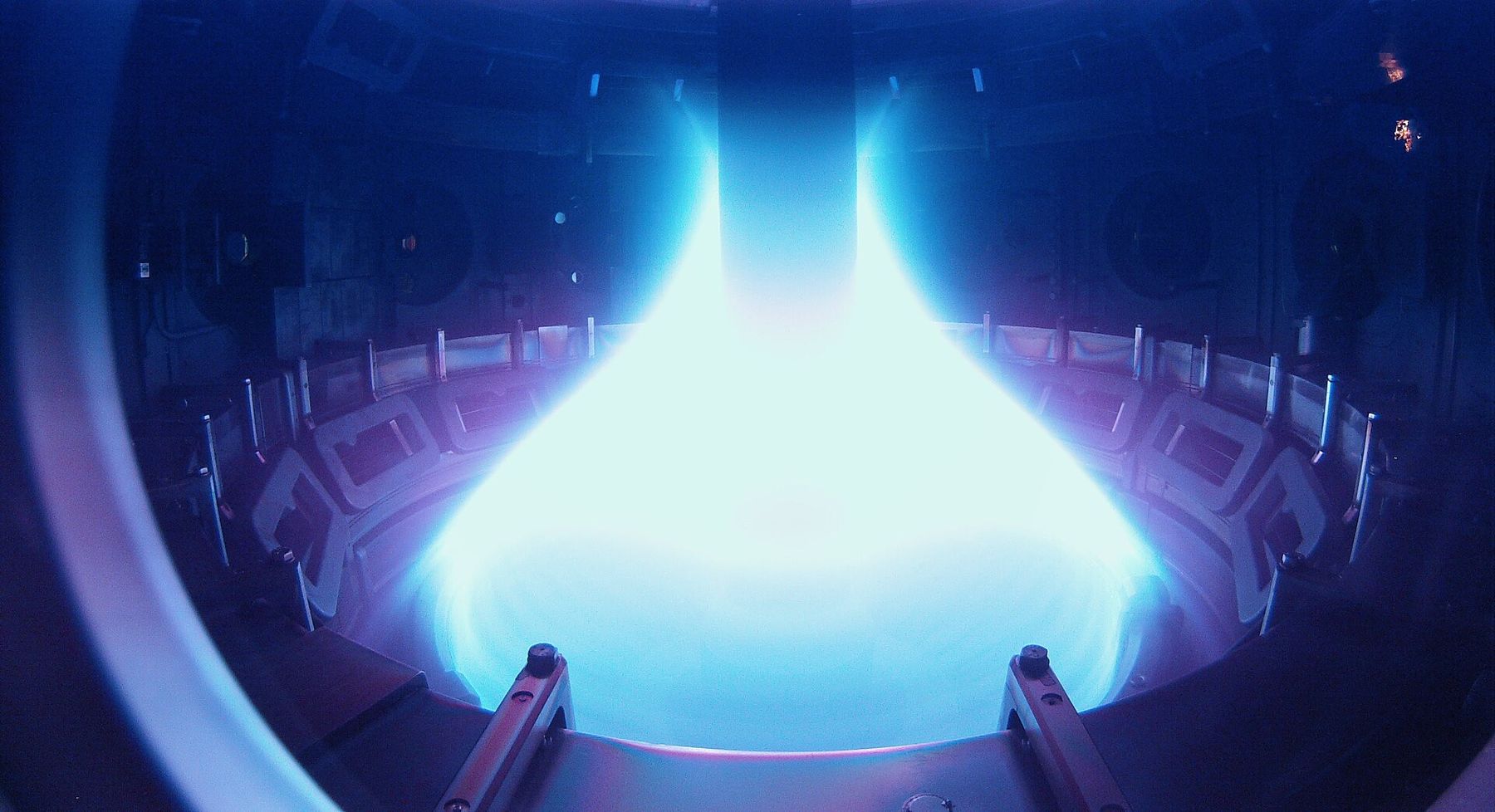
A plasma at fusion temperatures would instantly damage any wall it touched. Magnetic confinement uses strong magnetic fields to hold the charged plasma particles away from the walls, since charged particles spiral along magnetic field lines.
The most developed configuration is the tokamak, a Russian acronym for a toroidal chamber with magnetic coils. Its plasma forms a ring, or torus, held in place by a combination of fields:
- Toroidal field coils wrap around the ring and produce a strong field running the long way around it.
- A central solenoid drives a large electric current through the plasma itself, which creates a second field component wrapping the short way around.
- Poloidal field coils outside the vessel shape and position the plasma.
The combined field lines twist helically around the torus and form nested magnetic surfaces that confine the plasma. External heating systems, such as beams of energetic neutral atoms and radio-frequency waves, raise the plasma to fusion temperatures. Spherical tokamaks, such as MAST and its successor MAST Upgrade in the United Kingdom, use a compact, cored-apple shape to achieve good confinement in a smaller device.
The two fusion products behave very differently. The alpha particle is charged, so the magnetic field confines it, and it deposits its energy in the plasma, helping to keep it hot. The neutron is uncharged, passes straight through the magnetic field and enters the surrounding structures, where it deposits its energy as heat.
Where does the tritium come from?
Deuterium is plentiful: about one hydrogen atom in every 6,700 in seawater is deuterium, and it is extracted routinely. Tritium is radioactive, with a half-life of about 12.3 years, and occurs naturally only in trace amounts. A fusion power plant must therefore produce its own tritium.
The proposed method uses a breeding blanket lining the vessel and containing lithium. When a neutron strikes a lithium-6 nucleus, the reaction produces helium and tritium. The blanket thus performs three jobs at once: it captures neutron energy as heat for power generation, it breeds tritium to refuel the plasma, and it shields the magnets and other components from radiation. For a plant to be self-sufficient, it must breed slightly more than one tritium atom for every tritium atom it burns. ITER, the large international tokamak under construction in southern France, plans to test blanket modules in a fusion environment as part of its research programme.
What did the National Ignition Facility achieve in 2022?
Magnetic confinement is one approach to fusion; inertial confinement is another. The National Ignition Facility (NIF) at Lawrence Livermore National Laboratory focuses 192 laser beams onto a tiny capsule of deuterium-tritium fuel. The laser energy compresses and heats the capsule so rapidly that fusion occurs before the fuel can fly apart.
On 5 December 2022, NIF delivered 2.05 megajoules of laser energy to its target and produced 3.15 megajoules of fusion energy, a target gain of about 1.5. This result, later published in Physical Review Letters, was the first laboratory demonstration of target gain greater than one and a major scientific milestone.
The meaning of the number depends on its accounting boundary. Target gain compares fusion yield with the laser energy reaching the target, so it measures the physics of the implosion. Producing the laser light requires far more electrical energy than the light itself contains, and converting fusion energy into electricity involves further losses. Facility energy use and electricity generation therefore lie outside the target-gain figure. The milestone demonstrated that a fusion fuel capsule can release more energy than it receives, an essential step on a longer path.
How do fission and fusion compare?
| Fission | Fusion (deuterium-tritium) | |
|---|---|---|
| Fuel | Uranium-235, plutonium-239, uranium-233 bred from thorium | Deuterium from water; tritium bred from lithium |
| Reaction | A heavy nucleus splits after absorbing a neutron | Two light nuclei combine into helium and a neutron |
| Energy per reaction | About 200 MeV | 17.6 MeV |
| Operating conditions | Coolant at roughly 300 °C in water-cooled plants | Plasma at 100 million °C or more |
| Neutrons | About 2 MeV at birth, slowed by a moderator | 14.1 MeV, more energetic and more damaging to materials |
| Development stage | Commercial power stations operating worldwide | Experimental devices; power-plant systems in development |
Which engineering questions do they share?
Despite their differences, fission and fusion plants face a common set of engineering challenges.
- Neutron transport. Both produce intense neutron fields. Calculating where neutrons travel, what they strike and what reactions they cause is central to core design in fission and to blanket and shield design in fusion.
- Heat removal. Both convert nuclear energy into heat that must be carried away by a coolant at high temperature and fed to a power-conversion system.
- Radiation shielding. Both must protect people and sensitive components, such as superconducting magnets in a tokamak, from neutron and gamma radiation.
- Materials under irradiation. Neutrons displace atoms in structural materials, causing swelling, hardening and embrittlement. Fusion's 14 MeV neutrons are especially demanding, and materials research serves both fields.
- Activation and waste. Neutrons make structural materials radioactive. Choosing low-activation materials and planning for their management matters for both.
- Remote handling and maintenance. Radiation levels inside both kinds of plant call for robotic and remote maintenance systems.
- Validated models. Both depend on simulation supported by experiments and benchmarks to predict performance and demonstrate safety.
These shared problems create real opportunities for common computational methods. The same neutron transport techniques that calculate power distributions in a fission core can calculate tritium breeding in a fusion blanket. The same thermal-hydraulic methods apply to both coolant systems. Each concept retains its own physics and its own qualification requirements, while the underlying tools can serve both.
Sources
- Lawrence Livermore National Laboratory, National Ignition Facility 2022 Annual Report
- Abu-Shawareb et al., Achievement of Target Gain Larger than Unity in an Inertial Fusion Experiment, Physical Review Letters 132 (2024)
- ITER, Tritium breeding
- U.S. Department of Energy, Nuclear 101: How Does a Nuclear Reactor Work?